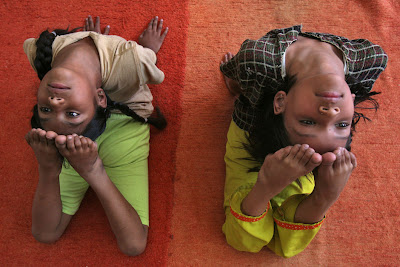
We desire to bequest two things to our children-- the first one is roots; the other one is wings. (Sudanese Proverb) Image by Rebecca Thom, Lake Tanganyika, 2010
Showing posts with label schools. Show all posts

Monday

Yoga in Schools


There is no doubt in my mind that youth today need to learn more ways of coping with stress from technology, overwhelm of information and over-testing. Parents and teachers say that student's are lacking focus, the ability to concentrate. But what kind of practices are we offering as examples? What resources are we giving students so that they might access peace of mind?

There is no better place to practice focus, and discipline than on the yoga mat. It's lessons can be incorporated into all realms of one's life. Yoga literally means, 'Union,' which takes us back to the Greek understanding of paideia - in which the first focus of learning is that of the body, beginning only with gymnastics and music, and later progressing to theory. The body soul union has largely been forgotten in schools.

Did I mention that 1 in 5 American children are obese? The radical adjustments we need will come from reprogramming diet and exercise cravings, which are like addictions in brain function . This kind of change will only come through practice, re-circuiting what is good and abandoning that which weighs you down.

Friday

Ken Robinson says schools kill creativity | Video on TED.com


This video is one of my personal favorites on TED - Ted, in case you don't know it, is a nonprofit devoted to the spread of good ideas in Technology, Entertainment and Design. They have an annual conference in California, as well as events and talks worldwide. On their website you can access amazing talks from all different kinds of thinkers, and speakers. Every talk is 20 minutes. You can see Jane Goodall's TED talk by clicking on the link at then end of that post below.

Robinson's speculation hails apon Howard Gardner's approach to the notion of 'Multiple Intelligences.' Garnder's Multiple intelligences has immense educational implications because the student's success in school is greatly affected by the ways that the individual's strengths are either explored and nurtured or contained. Garnder focuses on the goal of education geared towards understanding and the student's direct involvement in the learning process. The empowerment of the student to engage meaningfully in their own learning is the schools most essential task. This is increasingly placed on the back burner as standardized testing and assessment take precedence in classrooms. Testing does not take human development into consideration, nor is it contextualized to culture. And the fact that tests are being standardized and applied to different cultures around the world, as a benchmark for intelligence is careless because definitions of intelligence are clearly shaped by time, place and culture.


Girls recall the day's lesson, via 'rote learning' after school in a sand-floored classroom. Keta Peninsula, Ghana, 2009


Are schools using varied methods of production, perception and reflection? Is the process being assessed, or merely the results in standardized form? How can youth be empowered to access and activate their own styles of learning, their individual talents?
These questions are not only for students in their youth, but for all of us who have been marked by the limited western notion of intelligence. Individually, am I actualizing my strengths, in the light of my specific community? Learning and the empowerment of individual capabilities is a lifelong process.

One particular tool that Gardner suggests is the time-honored tradition of apprenticeship. This relationship not only allows an experiential process to help guide and distinguish the student in their individual talents, but also offers the possibility of empowerment. Also, the mentor or master is able to witness the student in their approach and growth. The student's strengths should become the map for their educational development and learning style.