We desire to bequest two things to our children-- the first one is roots; the other one is wings. (Sudanese Proverb) Image by Rebecca Thom, Lake Tanganyika, 2010

Friday

Back to School, Back to the Land

This week as our youth are going back to school, our farmers are busily attending to their last yielding crops, preparing the squash and pumpkins.  The anticipation for September is ubiquitous; felt in the urgency of the migrating birds moving south, the kids who have already separated from summer and the beginning of fashion week's global tour. And the leaves are marked in colour with the appearance of fall.

As I helped Farmer Steve at his farm in the Catskills today, I thought about all those youth, suddenly sitting in hard chairs in their classrooms.  The tomatoes were dripping off the vine and we were trying to keep up with them, plucking out the perfect ones by the gentle handful.  We filled buckets and leaned over our legs, reaching forward and down. 'This is a primal position' Steve told me, 'it just feels so good... as though you are operating from an ancient place of humanity.' In the morning light the grass was still dewy and our motions were matched with conversation and then silence as we each moved down the rows.

Overcome by rich smells of soil, ripening tomatoes and rotten ones I thought about the ways that students are able to use their senses in the classroom.  Our hands and nose, ears and eyes are such valuable tools for deep learning.


“Deep learning is learning that takes root in our apparatus of understanding, in the embedded meanings that define us and that we use to define the world.”  
What better way for something to become relevant,  than if it is experienced first hand and with all the senses.

I think this is one of the defining characteristics of 21st century education.  And it's not a new idea; Jean-Jaques Rousseau wrote about it in his 1762 treaty 'On Education' or 'Emile.'  His ideas were radical at the time, but now his belief in 'natural education' could be essential for the technology driven next generation.  He believed in embodied knowledge.  Rousseau believed in bringing the student to life.  He wrote, 'to live is not to breath, it is to Act! to make use of our senses, our facilities (42).'


Having the skills to cultivate land has long been considered one of the virtues of the wise.  It has the capacity to teach us crafts both technical and conceptual.  We are made to understand seasons, inter-relativity, responsibility, ownership, exchange, morality.  We are meant to know and recognize our relation to other living things and their flourishing.  So as we're pulling carrots out of the ground and shaking the moist soil back to the earth, I'm thinking about the senses of our next generation.  I'm remembering how freedom as a child is learning and that nature provides the greatest playground.  I want our youth to understand that the boundless connectivity of the World Wide Web is also visible in the natural world.  So how can we get more youth onto farms and into the woods?  I know that my own capacity to pay attention is increased by the feeling of sun on my neck, clean air and expanse.  Why is it so easy to diagnose ADHD, but rarely a finding of 'nature deficit disorder (NDD)?'


Richard Louv coined the term NDD in his book 'Last Child in the Woods,' which brings together new studies indicating that direct exposure to nature is essential for a child's healthy physical and emotional development. Our beloved American naturalist Thoreau said it;
"Here is this vast, savage, howling mother of ours, Nature lying all around, with such beauty, such affection for her children, as the leopard; and yet we are so early weaned from her breast to society; to that culture which is exlusively an interaction of man on man."
Many educated Boomers, X and Y-generations are making their own return to subsistance or community farming.  I know countless farmers with countless degrees who have given up high paying jobs in order to cultivate land.  What is this shift?  And how can we get youth on board?  As we move beyond outdated modes of educating, let us remember how freedom in youth and connection to  'place' are at the core of deep learning.  In a world of constant flux and accelerating information we could all use more connection to the soil.  It's those moments of loosing time to nature's harmony that we begin to come back to ourselves.  And in our flourishing, we are learned.

Photos and text by Rebecca Thom, 2012

Monday

Greet Me


 Man on sixth Avenue, NYC by Rebecca Thom

I live in New York City where legend warns that people are hard and don't look at each other in the street.  Although you can find this phenomenon in certain regions and blocks of the city, for the most part, I've never been somewhere with more eye contact.  Though greetings are usually kept for those special moments of madness in the subway when someone does something shocking or unforgivable and you just have to look at your neighbor and have a word, many are ready to exchange and are just waiting for the opportunity.  It's true that more and more we are living in a world of digital communication, where people find themselves enraptured by their cell phones, email, tweets and instagrams (I have been loving witness people taking photos of the little things they notice, this app actually seems to make people more present).  Yet, I am a firm believer in the old school tradition of greetings.  Having lived in Africa I am actually quite fanatic about them.  Should you find yourself in an elevator with me, I will probably talk to you.  There is an old African proverb that says;  

Haraka Haraka Haina Baraka
Hurry Hurry has no blessings.

In many countries throughout the world you would be considered impolite for not greeting the person you pass in the street.  You are there together, so why not?  It is those moments in between rushing around the city, or getting to the gym that make up your life.  There are human equivalents of angels everywhere, you just have to look up and say hello - You never know what you might find in the other person.  And yes, sometimes people will look at you as though you're mad, but most of the time you will be greeted back and somehow, between all the technological interchange, you will feel more human.

Babu. Kasulu, Tanzania, 2010 by Rebecca Thom
Note: For the streets of Tanzania there are varied ways of addressing that pay respect to age, gender and class.  For example, an elder is to be greeted with 'Shikamoo' which literally means, 'I take your feet' to this, the elder or respected individual responds, 'Marahaba' which means, 'I thankfully accept your respect.'  Even the chosen intonation denotes a quality of submission; often making the 'Shikamoo' resound in an emphatic, 'Shhh' falling off into an almost silent 'kamo'  The use of accentuation is sometimes even paired with body motions.  A child greeting an elder, for instance, may dip one knee and downturn the gaze in order to further illustrate their respect.  This particular greeting goes straight to the heart of understanding Swahili culture.


Saturday

Learning on this Land

In June I had the fortuity of traveling through the vast expanse of historic territory that is South Dakota. It is a state with a population of 812,383 (2009) and contains seven severed reservations, cut-up squares where the Oglala Sioux people now live. In the southwest corner of the state there is a reservation called Pine Ridge Agency which sits in the barren expanse east of the sacred Black Hills, and stretches north to the dramatic temper of the Badlands - the place where the Lakota Ghost Dances were before soldiers prohibited them. The tragic history there runs as deep as the landscape so aptly named. But the most devastating part of the story is written in the faces of youth today, whose dream might be just to live beyond 50.


Badlands, Rebecca Thom, 2011

The three counties that make up Pine Ridge are among the poorest in our Nation. With some of the highest infant mortality rates, lowest life expectancies and unemployment rates exceeding 80%, the people of Pine Ridge live in a deep poverty only imagined beyond our borders. No, this is America. These are the first Americans. This is the heart of our Nation and we should be looking more closely at the devastation here. In the late 1800s, as Indian land was sold and swindled all remaining, diverse bands of Native Americans were moved into the confines of the Reservations.

"...And we made these little gray houses of logs that you see, and they are square. It is a bad way to live, for there can be no power in a square. You have noticed that everything an Indian does is in a circle, and that is because the Power of the World always works in circles, and everything tries to be round. In the old days when we were a strong and happy people, all our power came to us from the sacred hoop of the nation, and so long as the hoop was unbroken, the people flourished."
- Black Elk Speaks


We drove down to Pine Ridge one day in order to visit the burial ground and memorial center of the 1890 Massacre at Wounded Knee, in which hundreds of innocent Lakota people, including women and children were shot and killed by soldiers one snowy day. The burial site is a mass grave on the top of a windy hill, surrounded by chain-link fencing and other graves of people that died too young. At the bottom of the hill there is a circular building, the 'museum.' Despite daylight, inside the rotunda you could hardly read the story under one naked light bulb that hung from the middle. The tragedy is pieced together through prints of photos, hand written cardboard and painting on the wall. It is hardly a museum, but a relic of the devastation - of the thievery that has occurred amidst these people. Four young men stood at the entrance, welcoming us, urging us to buy one of their hand crafted drums or dreamcatchers - neither with any authentic appeal. They were desperate, but quiet. One of them was highly informed, yet shy. Another of them was drunk, yet intently sober - he was the one who sat with us outside and spoke.


The Burial Site at Wounded Knee. By Rebecca Thom

We rolled our tobacco and then offered it to them because that is what you do. Then, over a cigarette this young guy in his early twenties, with a face scarred with acne and anguish, described life on the Res. He started out with words of gratitude for the greenness of the rolling hills that surrounded us as only a slight portion of the Native land is any good for anything, the landscape is usually harsh browns or white with snow. But this summer the rain had been a plenty and the land was bright and lively. A sickly looking dog slept below us, a bootlegger passed by selling alcohol out of his mini van (alcohol is illegal on the Reservation) and the young man continued on, his breath smelling thick of booze, he spoke slowly. He told us that he worries for his sisters, he fears they'll commit suicide. He described the other ways that people live and die there; Cancer is rife and the hospital care is poor, alcoholism takes people if they don't go first in car accidents. We asked him his dream and he went quiet for a while,

"I guess it's to live longer. You know, live beyond 50."

Monday

Yoga in Schools


There is no doubt in my mind that youth today need to learn more ways of coping with stress from technology, overwhelm of information and over-testing. Parents and teachers say that student's are lacking focus, the ability to concentrate. But what kind of practices are we offering as examples? What resources are we giving students so that they might access peace of mind?

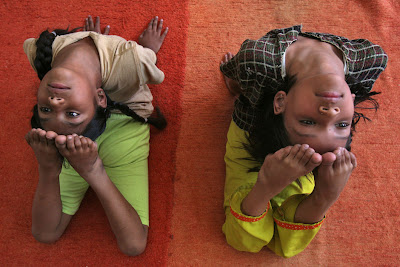
There is no better place to practice focus, and discipline than on the yoga mat. It's lessons can be incorporated into all realms of one's life. Yoga literally means, 'Union,' which takes us back to the Greek understanding of paideia - in which the first focus of learning is that of the body, beginning only with gymnastics and music, and later progressing to theory. The body soul union has largely been forgotten in schools.

Did I mention that 1 in 5 American children are obese? The radical adjustments we need will come from reprogramming diet and exercise cravings, which are like addictions in brain function . This kind of change will only come through practice, re-circuiting what is good and abandoning that which weighs you down.

Wednesday

Nuclear Power: We have a great deal to learn and become responsible for.


Mother and Child sit in the wreckage of Hiroshima, 1945.

The Essential Resource

March 22nd is World Water Day.


Water is life's matter and matrix,
mother and medium
There is no life without water.

- Albert Szent-Gyorgyi, a Hungarian Biochemist, 1937

The Authentic Woman


I liked Arianna Huffington's post to commemorate yesterday's International Women's Day. She reflected on the invaluable lessons that her mother taught her and how she applies it to her work and family life. Her story touched me, as does her capacity to nimbly dance the line between deal-closers and motherhood, with elegant femininity.

I thought I could also write about my mother today and all the other woman that have inspired me throughout my life. Then, as I recognized there are just so many that continue to awe me each day; my sisters, aunts, cousins and dear friends around the world, I realized it's just too much for one story -
So today I will focus on just one.

She is also a mother, a grandmother, a sister, an activist, intellect, brazen beauty, confidante, friend, survivor, globe-trotter, entrepreneur, extrovert and full of all the best kinds of true grit. She was introduced to me by my mother and I was instantly taken by her stature and fashion of speaking; a sort of clarified Bostonian accent, with clear syllables and the invocation of French when English just wouldn't do. She handed me her card once, with beautiful embossed letters declaring her position: MATRIARCH. I was instantly enchanted.

This Matriarch is part of what has been coined the 'Silent Generation,' those who were born during The Great Depression and World War II. They say that members of this generation were "withdrawn, cautious, unimaginative, indifferent, unadventurous and silent." My dear friend and Matriarch couldn't be a further departure from these qualities - au contraire! She is the kind of person that makes new friends wherever she goes, who says what she thinks and does what she says, she is ageless, and wears many (metaphorical) hats. She had her first child in a hospital in Morocco in the early sixties, moved triumphantly through her husbands unforeseen suicide and her own bout with cancer, raised her three children and is a continual inspiration and friend for her grandchildren and fabulous people of all ages and creeds throughout this wild world. She is simply a vivacious, unstoppable woman.

She has taught me many things and offered so many experiential gems, but there is one decree she once shared with me that is of utmost importance to women today.

Be Authentic.

I think of these words each time I am faced with some New York moment of superficiality, or when feeling insufficient or provoked - I think of her when I feel actualized, unafraid and in joy. There really is no excuse not to be authentic, to be oneself entirely. If not that, than what?

Poetry of Revolution

“A man in his forties/ thin/ handsome today/ stroking his black beard/ steps firmly on the ground/ tells the TV camera/ with a budding smile/ that today/ for the first time in his life/ he felt he was Egyptian.”

- Sharif S. Elmusa of Egypt blogs about the poetic, political nature of Revolution. You can read more here.

Monday

Power of the People

There have been outbreaks of violence since Antigovernment protests arrived in the Libyan capital, Tripoli today.

In the first months of 2011 we have seen a familiar call for freedom. Spread from out of Northern Africa to the Middle East, calling out with force for liberation from the iron fist.
In the U.S. 170 million Americans are angered at the proposed elimination of federal funding for public broadcasting. Citizens are also speaking out against the amendment passed by Republican-led senate on Friday, which would stop all funding for Planned Parenthood. And on February 11th, the same day that Mubarak stepped down Republican Governor of Wisconsin quietly commenced an attack against public sector unions. All the protests that have ensued in recent days are asking Government officials to honor their right to civic participation.

This wave of radical political alteration reminds me of Amartya Sen's notion of 'Development As Freedom,' in this thesis Sen approaches freedom and the developmental process as intertwined dynamics. The more freedom people have, the more likely they are to partake wholly in their society with greater happiness and health - the more freedom people have the greater the productivity.
Freedoms are not only the primary ends of development,
they are also among its principle means.' – Amartya Sen

People must be granted the Right to speak out, share information and assemble peacefully. Public Broadcasting is on the line, and it is the people's source to reliable news and the capacity to . Do what you can for Public Broadcasting, call your elected official by going to this site. Public Broadcasting allows people to participate in the political process as informed citizens - And to have choices other than Fox News when seeking out unbiased coverage.

Wednesday

انا فخور لسكان البلاد Proud of the People of Egypt

It has been more than two weeks since the advent of the protests in Egypt, yet the gathering of people in Tahrir Square and the strength of their feelings are escalating. The Middle East is entering a New Wave, in which the Y generation is stirring the murky waters of antiquated power. Yet, it is not just the youth - it is everyone who desires to live in 2011, to keep up with the fast changing world, to be part of it. As we can see in Tahrir Square, the faces of the protesters range in age, class and creed - They are Egyptians, and they are demanding to be heard.

It is People's revolution; they are not calling out in the name of Allah or ideology, these people are calling out for their freedom in today's world. The following tweet was posted to the Lede blog in the New York Time's, which brings together a nice montage of reportage from blogs, cellphones images and people's accounts. It is amazing to see the spread of information and imagery via the web, and I feel fortunate that we have access to such a vast array of news sources, unlike the propaganda that is rife on television and news in Egypt.


I love Thomas Friedman's Op-Ed, 'Up With Egypt', here he gives the uprising a sense of hope and humanism.
The Tahrir Square uprising “has nothing to do with left or right,” said Dina Shehata, a researcher at Al-Ahram Center for Political and Strategic Studies. “It is about young people rebelling against a regime that has stifled all channels for their upward mobility. They want to shape their own destiny, and they want social justice”

From the Lede NY Time's blog: Taken with a blackberry this sign, on the Parliament gate reads
'Closed Until Regime is Toppled.'


I am distinctly proud of the protesters of Egypt and feel grateful to bare witness to this important moment in history.

Friday

Hirondelle; Media for Peace and Human Dignity

Hirondelle is the word for a swallow in French.

It is also the name of a Swiss-based NGO that works with journalists and citizens to bring Independent media to post-conflict zones in various nations throughout Africa. Presently Foundation Hirondelle operates or supports six radio stations. The mission of Hirondelle is to provide credible media, through rigorous and factual reportage - to the people, for the people. Hirondelle supports the people's right to a credible news source in their National language.

Photo by Jean Claude Capt, for Hirondelle

In 2008 Hirondelle became a 501c(3) in the USA. Based in New York and with a growing board of directors, the USA looks to support the work of Hirondelle and to cultivate partnerships with media and human rights non-profits while participating in relevant policy conversations.

It is a critical time for Independent local media, especially in the face of supposed democratic change. In Sudan, for example, in the wake of the referendum and with the impending separation of the South from the North - the people must have access to a credible and just local news source. The six stations, which can be streamed online are in Tanzania, Liberia, Sudan, the Central African Republic, The Democratic Republic of Congo and Sierra Leone. You can go to their respective sites by clicking on the links below or by visiting the Hirondelle website, or Hirondelle USA. There are currently more than 30 million listeners who tune in each day. Access to independent news should be a right. I support the vision of Hirondelle wholeheartedly; to see that more people have access to the credible news they need, and the opportunity to engage in dialogue in order to build a more peaceful civil society.


Thursday

Meditation in Schools


A the Ross School in the Hamptons each day begins with breakfast all together and then some kind of meditative practice; tai chi, yoga or meditation. I have long been an advocate of creating the space for some kind of quiet time, like the compulsory naps of preschool. What makes schools think that students don't need to take 20 as they get older? Au contraire, I think with the pressures of schoolwork, peers and adolescence it becomes more important for students to cultivate a quiet practice.


There is a great deal of research out there proving the benefits of transcendental meditation (TM) in reducing stress, trauma, increasing concentration, fostering healthy communication and ameliorating test scores and anxiety. The renowned Director Producer David Lynch has been practicing TM for over 30 years and in 2005 founded the The David Lynch Foundation for Consciousness-Based Education and World Peace. It's mission is:
To fund the implementation of scientifically proven stress-reducing modalities including Transcendental Meditation, for at-risk populations such as underserved inner-city students; veterans with PTSD and their families; American Indians suffering from diabetes, cardiovascular disease, and high suicide rates; homeless men participating in reentry programs striving to overcome addictions; and incarcerated juveniles and adults.

David Lynch calls the 20 minutes of TM practice, 'Quiet Time.' From more privileged students at the Ross School in the Hamptons to the youth hailing from agitated school zones - Every child, teacher and principal, All of us, could benefit from some kind of meditative practice. I can't say that I am a practitioner myself, but I know that I am negatively affected by the intensity of the world we live in today. I know that I will benefit greatly from giving myself 20 minutes twice a day. As an NYU Alumni I am also aware of the frighteningly high rates of suicide that take place within the institution each year; the pressures of school and parents, the high costs of city living, the over-bombardment of information and technology - We need more ways to check in with ourselves, to access the breadth and calm that lies below. Change, Lynch echoes, begins within.


Friday

مطلب التغيير - A Call for Change -

Symbols and Social media illustrate the contrastive movements of revolution in the 21st century.

North Africa is bustling with change at the moment. It is a fascinating lesson in understanding modern day Independence movements. The final results of south Sudan's recent referendum to split the North from the South will be announced at the end of the month. The vote, which remained reasonably peaceful is an enormous stride for a country devastated by civil war again and again since Independence. Sudan has one of the lowest literacy rates, at about 20-27% of the population. Thus, the voting was done using symbols to represent 'separation' and 'unity'.

Sudanese voters choose their vote by marking on of the circles with their fingerprint.

A bit further northwest Tunisian citizens are also stirring change in the 'Jasmine Revolution,' which was sparked in December when a 26 year old man lit fire to himself in protest after police tried to seize his unlicensed vegetable stand. He was a well-educated, unemployed young man trying to make a livable wage. Tunisians have been under the seemingly untouchable police state of Zine el-Abidine Ben Ali for 23 years. But this month all that changed. The people of Tunisia are taking to the streets without fear and demanding democracy. They have successfully ousted Ben Ali, freezing his bank accounts and removing close cabinet members from power. And the means they have been using to do so? Discontentment, and social media, including telephones, twitter, messaging and online forums. Harnessing these tools are the way forward in 21st century revolutiona, granting more freedom to the people. As we witnessed last year in Iran, for the first time people are able to use the internet and cell phone cameras in order to speak out and expose beyond the boundaries of tyranny.

The Washington Post points out other leaders in the region who are increasingly out of touch with the next generation of youth;
All around him is a depressingly familiar pattern. Libyan leader Moammar Gaddafi (68 years old) has been in power since 1969; Yemen's Ali Abdullah Saleh (64) has ruled since 1978 and Egyptian President Hosni Mubarak (82) since 1981. Algeria's Abdelaziz Bouteflika (73) is a relative newcomer, having been in power only since 1999.
May these elderly autocrats take heed of the changing times as people in the Arab world and North Africa are becoming increasingly fed up with decades of marginalization and are using all their resources to call for change.


If you'd like to read more about the Jasmine Revolution I tend to recommend Al Jazeera for Arab news because it is covering it much more widely than the NY Times.

Monday

Martin Luther King Jr. on Mutuality


"Injustice anywhere is a threat to justice everywhere. We are caught in an inescapable network of mutuality, tied in a single garment of destiny. Whatever affects one directly affects all indirectly. Never again can we afford to live with the narrow, provincial "outside agitator" idea. Anyone who lives in the United States can never be considered an outsider anywhere in this country."

Martin Luther King Jr's emphasis on inclusiveness holds lasting pertinence today, especially in relation to the integration of minorities throughout the world. As globalization accelerates, the movement of people, both involuntary and freely is increasing like never before - we must continue to undo the separatism of the past, and understand how to flourish together. America, a Nation committed to its tagged 'unity' is ever-divided.

King's wording of "outside agitator" prompts my feelings of the recent immigration debate.
In America one recent proposed federal legislation, that was not successfully voted in is The Development, Relief and Education for Alien Minors Act, known as the DREAM Act.
This bill would provide certain illegal and deportable alien students who graduate from US high schools, who are of good moral character, arrived in the U.S. illegally as minors, and have been in the country continuously and illegally for at least five years prior to the bill's enactment, the opportunity to earn conditional permanent residency they complete two years in the military or two years at a four year institution of higher learning.
On December 18th 2010 the DREAM Act failed to pass its reintroduction to the House of representatives, which, in my opinion is a glaring disavowal for this Nation's people and state of affairs. Taking away opportunities from youth who have been schooled in America is a disservice to the country's future and our economy. We should all be allowed to Dream big.

Wednesday

Afghan Women's Writing Project

I just discovered this amazing online magazine forum; The Afghan Women's Writing Project, an entirely volunteer run collective that 'empowers Afghani women to have a voice in the world despite a deteriorating security situation.'


I want to write, I want to write about
my dreams which never come true,
my power that has always been ignored,
my voice which is never heard by this deaf universe,
my rights which have never been counted,
my life decisions which are always made by others.
Oh my destiny, give me the answer, what am I for in this universe?
What does it mean to be an Afghan woman?
Hmm, I know you can’t provide me with an elegant answer so
Just give me the pen, the hidden pen
So that I can write, that is all I am asking for!...


Excerpt of poem written by Emaan.


The AWWP believes that the right to tell one's story is a human right. Increasing the freedom of women strengthens their capabilities and is an undeniable way towards human and societal development. Every woman has a story to tell. This online magazine and mentorship program between women writers throughout the world is giving voice to those too often hushed. There is nothing like the pen as a tool, as remedy, as revolution. Do take a gander at the site and support these women by commenting, letting them know that they are being heard.

Thursday

Happy New Year

Lately I have been catching myself making greetings like, 'Have a Merry Christmas!' and then remembering that I live in one of the most diverse cities in the World - with a rich woven myriad of creeds. I have come to the understanding that a lovely, and universal greeting to recall is the New Year. Although the calenders of some cultures vary in its time, all people understand and celebrate renewal each year. Here is Happy New Year greetings in a few languages from around the world.
Happy New Year!

سنة سعيدة - Kul 'am wa antum bikhair
Arabic

Shana Tova ראש השנה
Rosh Hashanah, the 'head of the Year' is Jewish New Year.

Bonne année
French

Feliz año nuevo
Spanish

'С Новым Годом!
- s Novym godom
Russian

新年快乐

Mandarin
Chinese Lunar New Year/Spring Festival -


Heri za Mwaka Mpya
Swahili

Tuesday

Our Most Untapped Resource


"Educate a boy, and your educate and individual.
Educate a girl, and you educate a community.
"
- African proverb via Greg Mortensen


"When women thrive, all of society benefits, and succeeding generations are given a better start in life. "
- Kofi Annan


"Women hold up half the sky."
- Mao Tse-Tung via 'Half the Sky' by Nicholas D. Kristof


*All photos by me, Rebecca Thom (Tanzania, Togo and Ghana)

Wednesday

Give a Little, It Will Mean A Lot


Emilie from Chad lives in the Bronx with her husband Bour

Another organization I can wholly support this holiday season is the work and efforts of the IRC. The International Rescue Committee works with refugees who have fled violence and persecution in their home countries. A fortunate few are granted sanctuary in the United States, where the IRC helps families resettle in a world very different from their own.


  • We prepare adults to become self-sufficient by offering job skills training, English classes, job placement assistance, cultural orientation to life in America and practical advice including help negotiating public transportation and navigating financial systems.
  • We invest in children by making sure they enroll in school and have access to tutoring, mentoring and recreational activities.
  • We strengthen families through parenting classes and counseling. And we ensure every refugee has access to health services.
  • We provide emergency housing assistance while refugees work to secure employment so that homelessness is never an option.
Give a holiday gift that helps refugees in your local community:

Your donation will support these efforts and will help newly resettled refugees in your community move beyond surviving and start thriving. And, when you choose one of the following gifts in honor of friends and loved ones by December 15, IRC will send them a personalized holiday card in your name.

A $25 gift can provide a backpack full of supplies for a refugee child starting school in the U.S.

A $75 gift can provide essential household supplies for a newly resettled refugee family including blankets, sheets and cooking utensils.

A $150 gift can provide emergency housing assistance to a refugee family.

A $300 gift can provide job training to help a refugee woman become a certified home daycare provider.

Tuesday

Conscious Christmas Shopping

I live in New York City - Where the month of November is but a gearing up for Black Friday, in a country where people leave their homes before digesting their turkey in order to get in line for the grand sales of the next day.

Yet, our country is edging towards a 10% unemployment rate. Couldn't we be doing more this season than just dashing for the next sale?

Here are just a few sustainable initiatives which have sparked my attention this Holiday Season, among others:

- Heifer International - You can give a Heifer, sheep or flock of ducks along with many other livestock, which provides someone in a developing nation with means to a sustainable living.


- Kate Spade and Women for Women International have created a partnership in Afghanistan and Bosnia, making quality goods while providing high wage jobs.


Both of these Afghan-made knitwear products can be bought in Kate Spade Boutiques in New York.

Ten-Thousand Villages also has goods from all over the world using Fair Trade Practices.


The World in 2011

This week I had the utmost pleasure of volunteering for The Economist's Annual Conference: The World in 2011 in New York City. In attendance were great thinkers and architects from disciplines across the board, and viewpoints voiced from around the world. Between speakers the two screens on either side of the stage played videos from citizens in Moscow, Shanghai, Jerusalem and Antarctica giving their predictions for the world in 2036.

Although some of the talks were dismal in news, a few speakers really caught my attention. Here I will only name two.

The first was a panel of remarkable women,

Mu Sochua, Member of Parliament, Cambodia,
Zainab Salbi, Founder and CEO, Women for Women International
and
Kah Walla, Director, Strategies S.A.

This talk made up the 'Women's Economy,' the most untapped, and fastest growing sector. The resounding message was clear; Women are taking the helm. Marcia Reynolds recently blogged a similar mantra in the Huffington Post titled, The Decade of the Woman is Upon us. She writes;
"In addition to the powerful worldwide consumer force that women represent today, factors such as urban migration, increased access to education, mobile technologies, micro-credit and low-market entry costs will create a global "she-conomy" where over one billion women will enter the workforce or start businesses by 2020."
Mu Sochua started her predictions naming women, the "she-economy" as the way forward in 2011. " As she as in economy, and she as in business," she said. Zainab reiterated, marking the need for inclusion for women not only in the micro- but also the macro- levels. Women need markets that are provided by the private sector. For example, Kate Spade, who has started outsourcing to a community of Afghan women, creating jobs while also responding to the consumer's demand to information and fair production. This is the way forward.

Girls in Kigoma, Tanzania, 2010.

Click here for more about the Women for Women and Kate Spade Partnership in Afghanistan.

Another deeply interesting speaker was Nick Shore, Senior Vice President of Strategic Consumer Insights and Research at MTV. His research of late has consisted of deep inquiry into the Millenial generation. The Y-gens are the single largest generational cohort in the history of the US, he started. They're rather narcissistic, he described, and yet they are the most powerful influencing factor propelling change. And research suggests that change is already here.

Take the nuclear family for example. In the past the configuration was the children radiating from the parents at the nucleus. Now he said, the children are designated the nucleus of the family. The children have become the main focus, and the family now operated more like a democracy, or 'peer-ocracy' than traditional family structures of the past.

Kids are living in an era of 'peer-ticipation' and 'peer-iarchy,' where everything is broadcast to friends and family. Youth have a voice more than ever, Shore said.

As social interface holds no boundaries this also means that increasingly youth do not find the time or space to reflect or spend time alone. I believe this new social paradigm will require changes in schools, to provide students with opportunities to quieten their brains from all of the information and chatter. Learning meditation or some other mind-body conditioning seems a healthy way for students to have the opportunity to check in with themselves, not to mention their bodies.

Another fantastic conference from The Economist community.